Good afternoon,
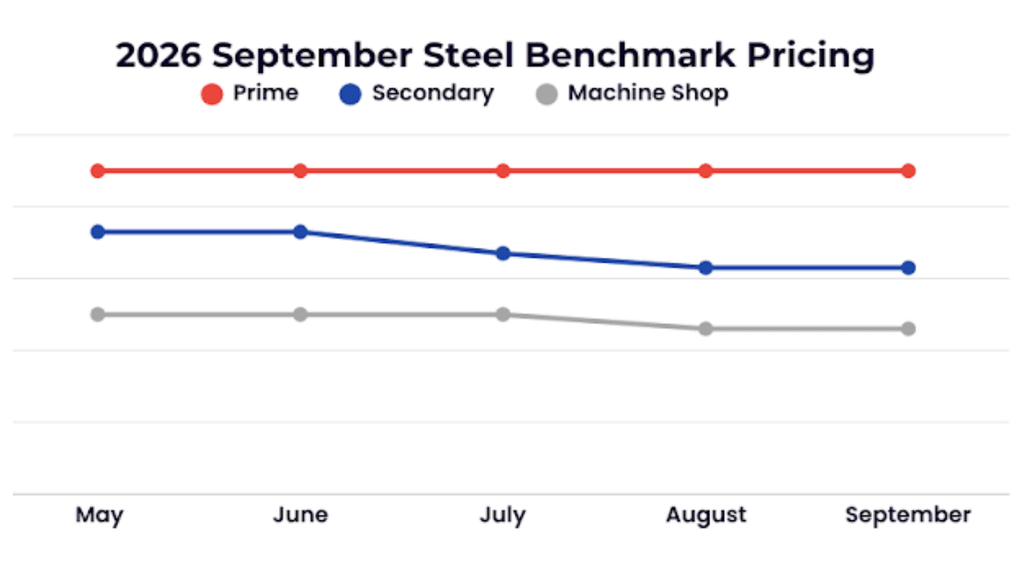
September market conditions remain largely balanced, with both buyers and sellers signaling a neutral outlook following modest softness during August. Inventory levels at steel mills remain near historical averages, and most market participants expect limited movement in either direction during the month. Higher energy costs, seasonal maintenance outages, and stable scrap flows continue to influence market behavior, but no single factor has emerged as a dominant driver. Overall sentiment points toward a sideways market with relatively stable pricing across most scrap categories.
Steel: In the ferrous market, steel scrap prices have remained generally unchanged as mills balance steady production with planned maintenance outages scheduled throughout September and October. While more than a dozen outage events are expected to temporarily reduce regional demand, tightening scrap flows and reduced feedstock generation have helped offset some of the downward pressure. Prime grades such as busheling continue to be supported by strong finished steel pricing, while obsolete grades remain under pressure due to adequate supply and lingering shredded inventory. Despite these challenges, most forecasts call for ferrous pricing to remain largely sideways during September.
Copper: The copper market continues to be heavily influenced by the pricing gap between U.S. COMEX copper and global LME copper. Ongoing tariff-related arbitrage has encouraged large volumes of copper to move into the United States, supporting domestic prices while reducing available inventories in other regions. This dynamic helped push copper to new record highs in early September, with both COMEX and LME prices reaching unprecedented levels. While recent inventory replenishment has eased some immediate supply concerns, copper remains highly sensitive to policy developments, global inventories, and industrial demand.
Aluminum: Aluminum markets showed modest improvement during the first week of September. Several mill aluminum scrap grades, including 3003, 5052, 6063 Extrusions and UBCs posted gains while secondary aluminum demand recently declined. Although UBC pricing continues to experience periodic volatility, recycled aluminum demand remains supported by can sheet production and broader sustainability initiatives driving closed-loop recycling programs. Overall, aluminum fundamentals remain constructive despite seasonal fluctuations in supply.
Brass: Brass markets have remained relatively stable throughout September. Supported by elevated copper values, brass pricing continues to benefit from healthy demand from foundries and industrial consumers. While brass experienced some weakness during the early September correction in copper markets, values generally remain firm compared to long-term averages. Market fundamentals suggest stable demand and balanced supply conditions heading into the fourth quarter.
Stainless and Alloys: LME Nickel volatility remains tight, with pricing holding within a subdued 30-day range. Demand and the pricing outlook remain stable, with no signs of a summer slowdown. Ferrous values continue to hold, supporting steady Chrome Stainless grades.
High-Temperature Alloys remain aligned with Nickel, although some market participants are applying modest downward pricing pressure.
Titanium prime grades are slightly lower, while Ferro Titanium remains steady.
Tool Steel and High-Speed Steel have seen modest declines, driven by continued weakness in Tungsten. Carbide and Tungsten Alloys continue to correct as consumers and traders gain greater clarity following the implementation of export restrictions.
Looking ahead, market conditions appear likely to remain stable through the beginning of the fourth quarter. Ferrous pricing is expected to remain rangebound as mills manage maintenance schedules and inventory levels. Copper will continue to be the primary driver of nonferrous market sentiment, with tariff policy, global inventories, and arbitrage activity remaining key factors to watch. Aluminum and brass markets should continue to benefit from steady industrial demand and favorable recycling economics, although near-term price movements will remain tied to broader commodity trends.