
August market conditions have remained largely stable, with balanced supply and demand limiting significant price movement across most scrap grades. Most consumers continue to point to a relatively quiet summer trading environment, as mill outages, seasonal slowdowns, and weaker export activity temper demand while scrap availability remains generally adequate. Inventories at domestic mills remain near historical averages, contributing to a market that is stable but lacking a strong directional catalyst.
Steel:
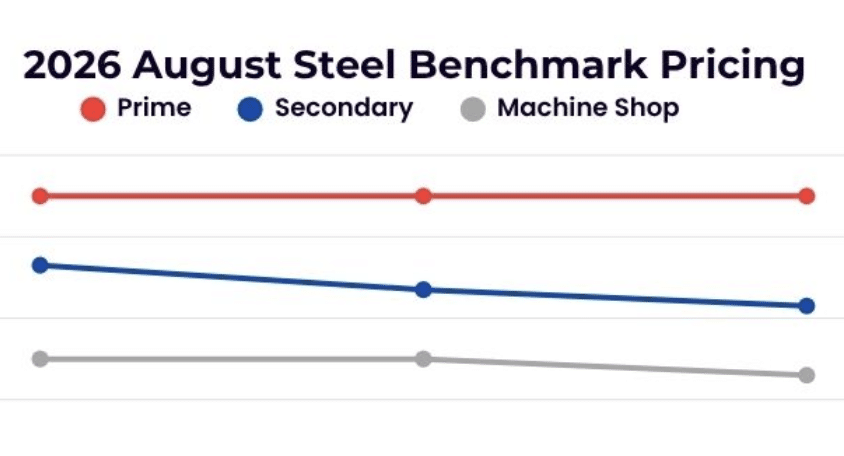
In the ferrous market, prime steel scrap prices remain unchanged from July levels, while cut grades declined again this month. Strong domestic steel production continues to support consumption, with U.S. mills producing approximately 1.87 million net tons of raw steel in the week ending August 1 and operating at an 81.0% utilization rate. While prime grades remain relatively well supported by strong finished steel pricing and solid mill order books, buyers generally continue to pursue a cautious purchasing strategy.
Copper:
Copper remains one of the strongest-performing commodities in the market. U.S. COMEX copper prices reached new record highs in early August as continued tariff uncertainty and supply concerns encouraged additional metal to move into the United States. The pricing gap between COMEX and the London Metal Exchange (LME) remains elevated, creating arbitrage opportunities that support domestic pricing.
Aluminum:
Aluminum markets improved modestly during August, with most scrap grades recording gains during the first week of trading. Demand for secondary aluminum remains stable, supported by can sheet, automotive, and industrial applications. Used Beverage Cans (UBCs) continued to perform well, posting gains from July levels and maintaining one of the stronger trends within the aluminum complex. National pricing indicators show UBC values trending higher than earlier in the summer, supported by steady consumption and ongoing demand for recycled aluminum feedstock.
Brass:
The brass market also strengthened during August, benefiting directly from the continued rise in copper prices. Brass scrap values posted modest week-over-week gains as foundries and consumers maintained steady purchasing activity. While increases have been measured, the overall market remains firm, particularly for red brass and higher-copper-content grades.
Stainless and Alloys:
LME Nickel remains in a tight trading range with a slight upward bias. Demand and pricing are stable, despite the typical summer slowdown. 304 and 316 stainless values continue to hold, while chrome-bearing grades may see a modest correction.
High-Temperature Alloys remain steady on moderate demand, though pricing has yet to return to year-to-date highs.
Titanium is relatively flat with a moderately bullish outlook, particularly for clean aerospace grades.
Tool Steel and High-Speed Steel remain somewhat volatile, especially Moly and Tungsten bearing grades. T-Series grades face greater downside risk as the underlying market softens.
Carbide and Tungsten Alloys continue to face headwinds, with softer demand and customers drawing down existing inventories rather than rebuilding.
Looking ahead, market fundamentals suggest continued stability through the remainder of the summer. Ferrous pricing is expected to remain rangebound as mills balance adequate scrap inventories with steady steel production. Copper is likely to remain the key driver within the nonferrous sector, supported by strong COMEX pricing and ongoing supply concerns. Aluminum and brass markets should continue to benefit from supportive underlying commodity prices and consistent industrial demand, although seasonal factors may limit significant upside in the near term.