Good Afternoon,
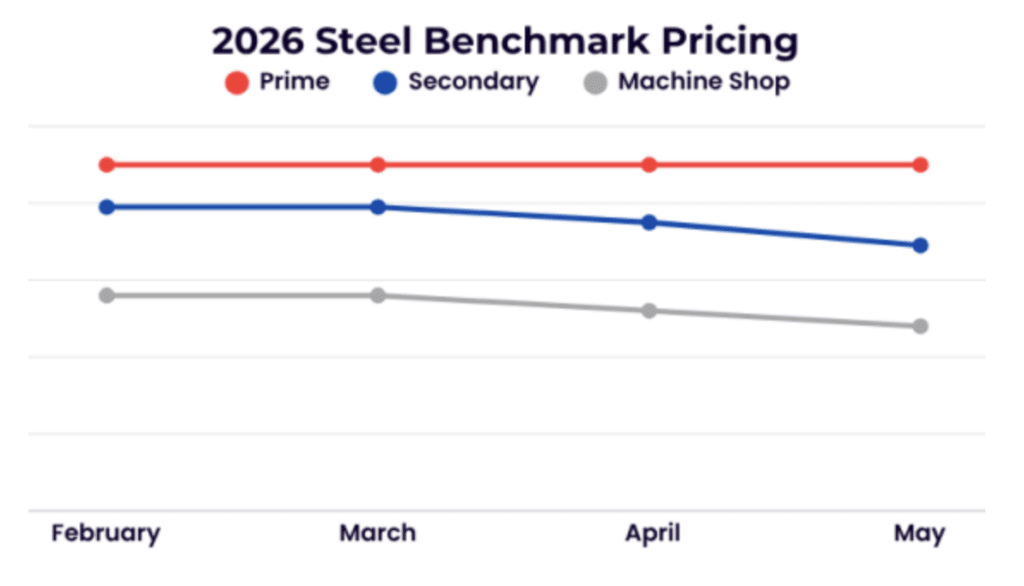
May market conditions in ferrous pricing was similar to the April softness, while nonferrous metals continued to show relative strength.
Steel
The U.S. ferrous scrap market took longer than typical to settle, but final pricing trends indicated largely stable conditions overall. The Chicago and Midwest markets shared a regional softness in heavy melt, shred and machine shop turning categories. Prime grades were stable with reflecting a sideways market.
Ferrous demand was supported by improving steel production activity, as U.S. mills increased output into early May. Weekly raw steel production reached approximately 1.856 million net tons, with capacity utilization exceeding 80 percent, representing a year-over-year increase of nearly 10 percent. Year-to-date production also remained elevated, indicating sustained demand from construction and manufacturing sectors.
Copper
Nonferrous markets continued to outperform ferrous in May, led by consistent strength in copper pricing. Across North America, copper scrap grades experienced broad gains reported in early May trading. Gains were also observed in insulated wire, brass and bronze categories, reflecting sustained demand and favorable market sentiment.
Aluminum
Aluminum pricing trends were more mixed but showed improvement compared to April. While certain scrap aluminum grades remained flat or declined slightly in early May, broader market data indicated increasing prices across multiple categories as the month progressed.
From a broader market perspective, macroeconomic and geopolitical factors continued to influence scrap pricing and flows. Ongoing global uncertainty, including elevated energy costs and trade policy developments, contributed to increased volatility in transportation and processing costs. At the same time, manufacturing activity showed gradual improvement, supporting demand for both ferrous and nonferrous scrap materials.
Stainless and Alloys
LME Nickel has posted notable gains over the past 30 days relative to last month’s average, placing renewed upward pressure on mills to elevate pricing across stainless and specialty alloy markets. We have observed moderate appreciation in both 304 and 316 stainless values, with 316 outperforming due to continued strength in both Nickel and Molybdenum indexes. Conversely, chrome-bearing stainless grades have remained relatively flat as the market awaits confirmation of this month’s mill steel pricing announcements.
While underlying demand fundamentals have remained steady, seasonal headwinds may begin to emerge as the market approaches the summer months — a period traditionally associated with planned mill maintenance outages and softer procurement activity. Additionally, mills may elect to further widen discount structures in an effort to offset increases in raw material indexes and preserve order flow amid potentially slower summer demand.
The majority of high-temperature alloys have mirrored the broader stainless market’s upward trajectory, with favorable movement seen in select Air-Melt alloys including 625, Monel 400, Hastelloy X, and select Haynes grades. In contrast, Vac-Grade alloy pricing has remained comparatively subdued. Robust supply availability has tempered additional price escalation, despite widespread expectations among market participants for stronger upward momentum. That said, trader sentiment suggests appetite may improve heading into June and July as inventories normalize and procurement cycles resume. Cobalt-based alloys such as F75, L605, and HS188 have remained largely quiet, with limited pricing volatility observed in recent weeks.
Titanium markets likewise continue to trade in a relatively dormant range. While Ferro Titanium grades have shown modest improvement, traditional 6-4 and CP Titanium products have yet to experience any meaningful upward movement.
Low-alloy tool steels and high-speed steels have generally remained stable, with the notable exception of Tungsten-bearing T-series grades. Tungsten markets rallied sharply, surpassing 52-week highs as pricing momentum accelerated. However, the rally retraced quickly following increased volatility surrounding China’s APT market, prompting widespread trader liquidation and a rapid influx of units into the marketplace. The resulting supply wave satisfied near-term demand requirements, leaving many consumers temporarily absent from the market for a one- to two-week period while processing inbound material and reassessing inventory positions.
USM remains focused on maintaining disciplined procurement strategies, optimizing logistics and flow efficiency, and working closely with suppliers and consumers to navigate evolving market conditions.