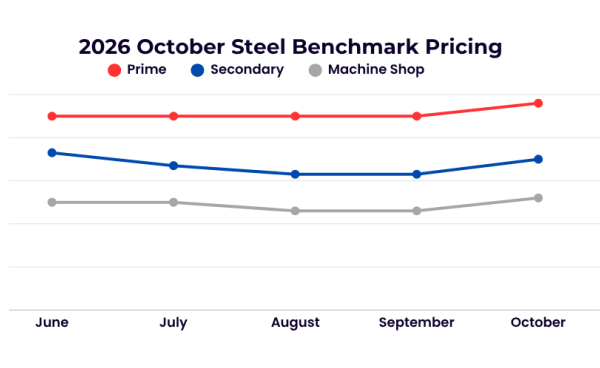
October market conditions have strengthened compared to the late summer months, with improving sentiment across both ferrous and nonferrous markets. Tighter scrap availability, improving export demand, and healthy steel mill order books have provided support for higher pricing, particularly in the ferrous sector. Market participants generally entered October with a more positive outlook, expecting stronger demand and below-average inventories to support pricing through the beginning of the fourth quarter.
In the ferrous market, scrap prices moved modestly higher during October. Market sentiment improved as tightening feedstock, stronger export activity, and healthy mill demand provided upward momentum after several months of largely sideways trading. Prime grades, including busheling, experienced some of the strongest support, while obsolete grades also benefited from lower scrap generation and lean yard inventories. Although scheduled mill maintenance outages continue to temper demand in certain regions, expectations remain favorable heading into the balance of the fourth quarter.
Steel production remains supportive of scrap consumption despite periodic outages. Market surveys indicate that demand is stable to improving, with many participants reporting stronger business conditions than seen earlier in the year. Tight inventory levels and higher transportation costs have also contributed to firmer ferrous pricing.
Nonferrous markets remained volatile but generally strong during October. Copper prices continued to trade near historic highs despite periodic profit-taking and market corrections. Supply concerns, ongoing infrastructure spending, data center expansion, and continued electrification projects are providing long-term support for copper demand. While some regional scrap markets experienced short-term fluctuations, overall copper values remain exceptionally strong compared to historical levels.
Copper continues to be driven by the ongoing pricing disconnect between U.S. COMEX copper and global LME copper markets. Tariff-related arbitrage activity has encouraged large volumes of copper to move into the United States, supporting domestic pricing and keeping scrap values elevated. While inventories have improved from the extreme tightness seen earlier this year, copper remains highly sensitive to supply disruptions, trade policy developments, and global infrastructure demand. As a result, copper scrap prices continue to trade at historically strong levels despite short-term volatility.
Aluminum markets softened slightly during the first half of October. Several aluminum scrap grades experienced modest declines as secondary consumers adjusted purchasing activity and primary aluminum markets consolidated recent gains. Despite these short-term declines, aluminum fundamentals remain healthy, supported by strong demand from packaging, transportation, and construction sectors. Used Beverage Cans (UBCs) continue to be one of the strongest-performing aluminum scrap categories, supported by robust recycling demand and increasingly tight feedstock supplies.
Brass markets remained relatively stable throughout October. Elevated copper values continued to provide support for red brass and yellow brass pricing, while demand from foundries and industrial consumers remained steady. Although brass pricing has not experienced the same volatility as copper, values continue to track favorably compared with historical averages due to the strength of the underlying copper market.
LME Nickel remained relatively stable following its recent decline, with Canadian Thanksgiving limiting trading activity and continued uncertainty surrounding Indonesian supply targets. 304 and 316 stainless grades held flat, though modest year-end reductions remain possible as mills scale back purchases and inventories. Chrome stainless grades should remain firm, supported by improving steel market conditions.
High-temperature alloys remain subdued amid weakening demand and limited nickel support, with further reductions anticipated through year-end.
Titanium pricing remains flat despite domestic scrap oversupply, while production backlogs persist due to delivery delays.
Tool Steel and High-Speed Steel face downward pressure from softer cobalt prices, although molybdenum remains supportive.
Carbide and tungsten alloys saw brief relief following U.S. critical-materials export restrictions, but weakening European markets have since prompted modest price reductions.
Looking ahead, fourth-quarter market conditions appear constructive. Ferrous scrap pricing is expected to remain supported by tightening supply, healthy mill order books, and improving export demand. Copper is likely to remain the primary driver within nonferrous markets, with trade policy, inventories, and infrastructure spending continuing to influence price direction. Aluminum and brass should continue to benefit from stable industrial demand, although seasonal factors may contribute to periodic volatility as the year draws to a close.